Chance, Generating
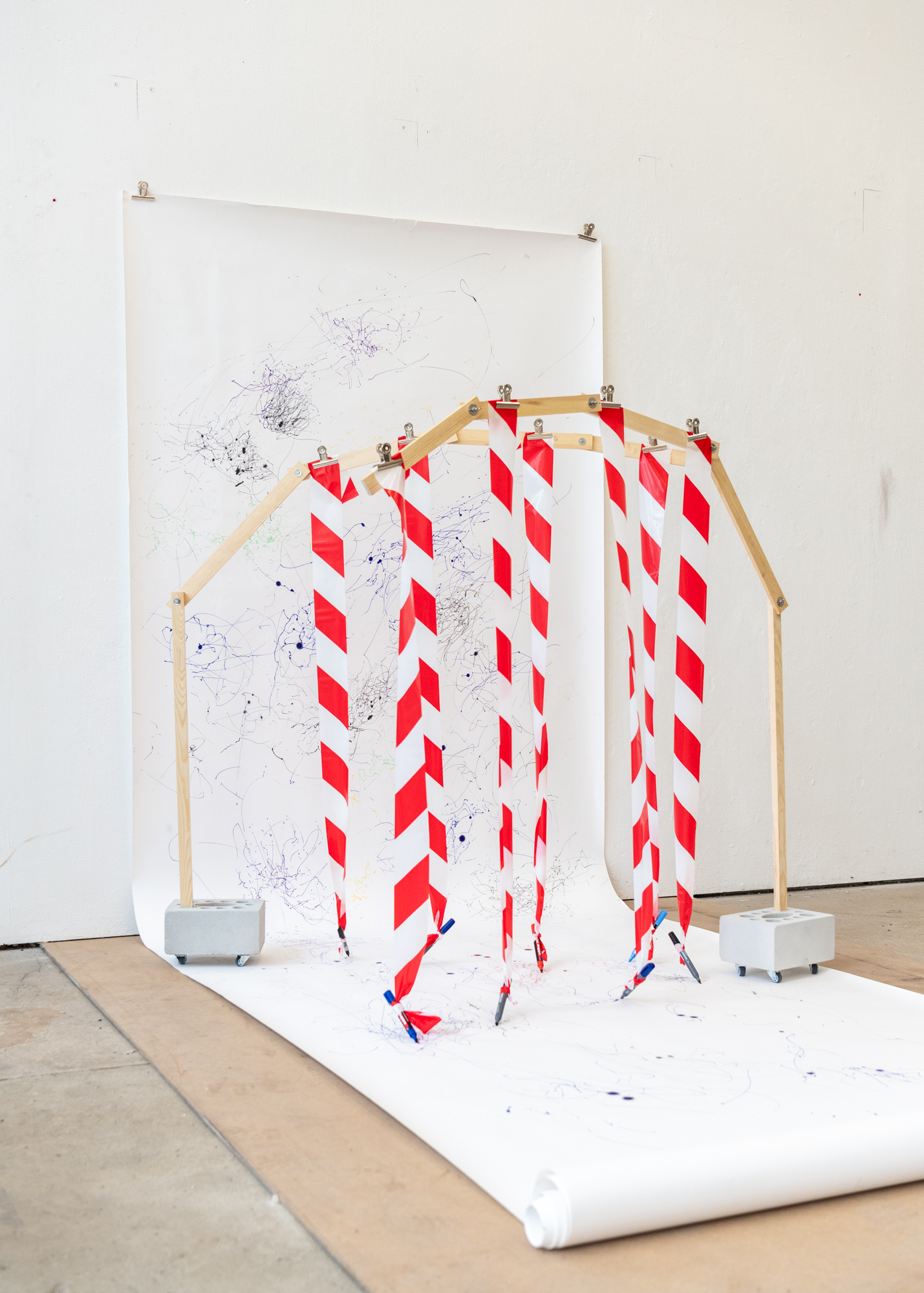
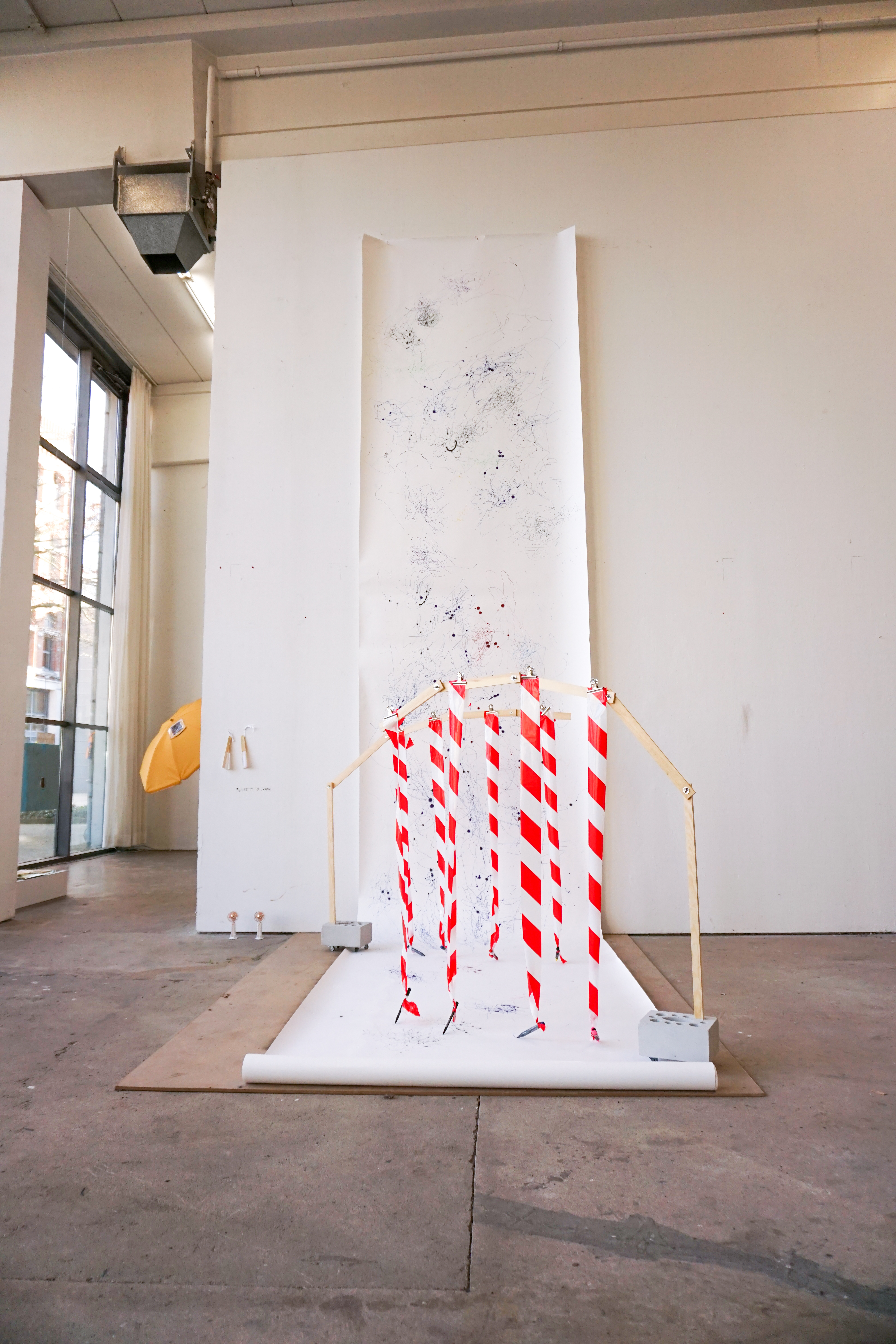
Wood, concrete, wheels, screws, washers, clamps, construction tape, fans, hand fans, markers, acrylic, oil stick, Fabriano Academia 200 gsm paper roll, 150 × 1000 cm
Variable dimensions
 Pictures 1, 3 and 4 by Jeremy Knowles
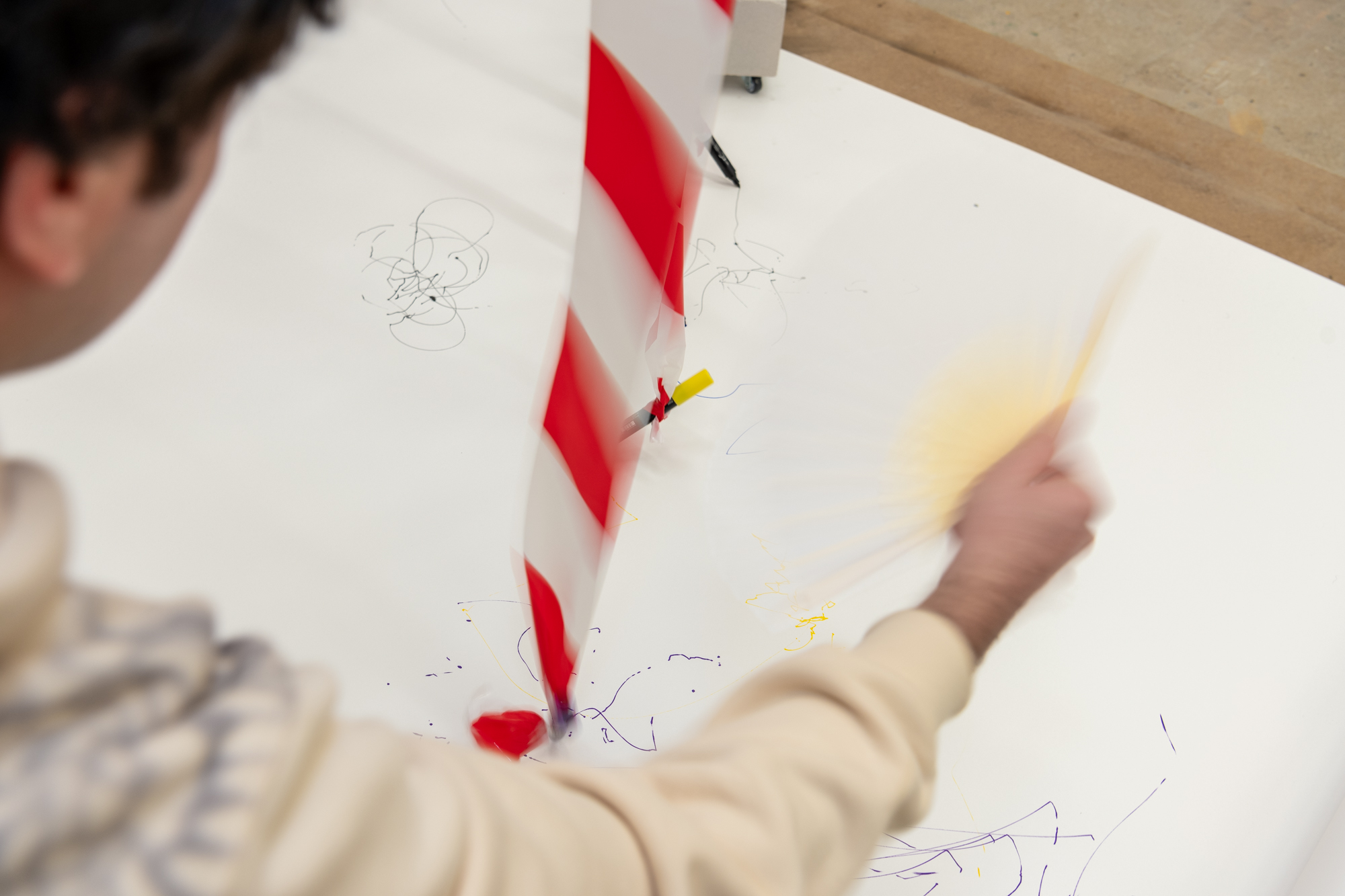
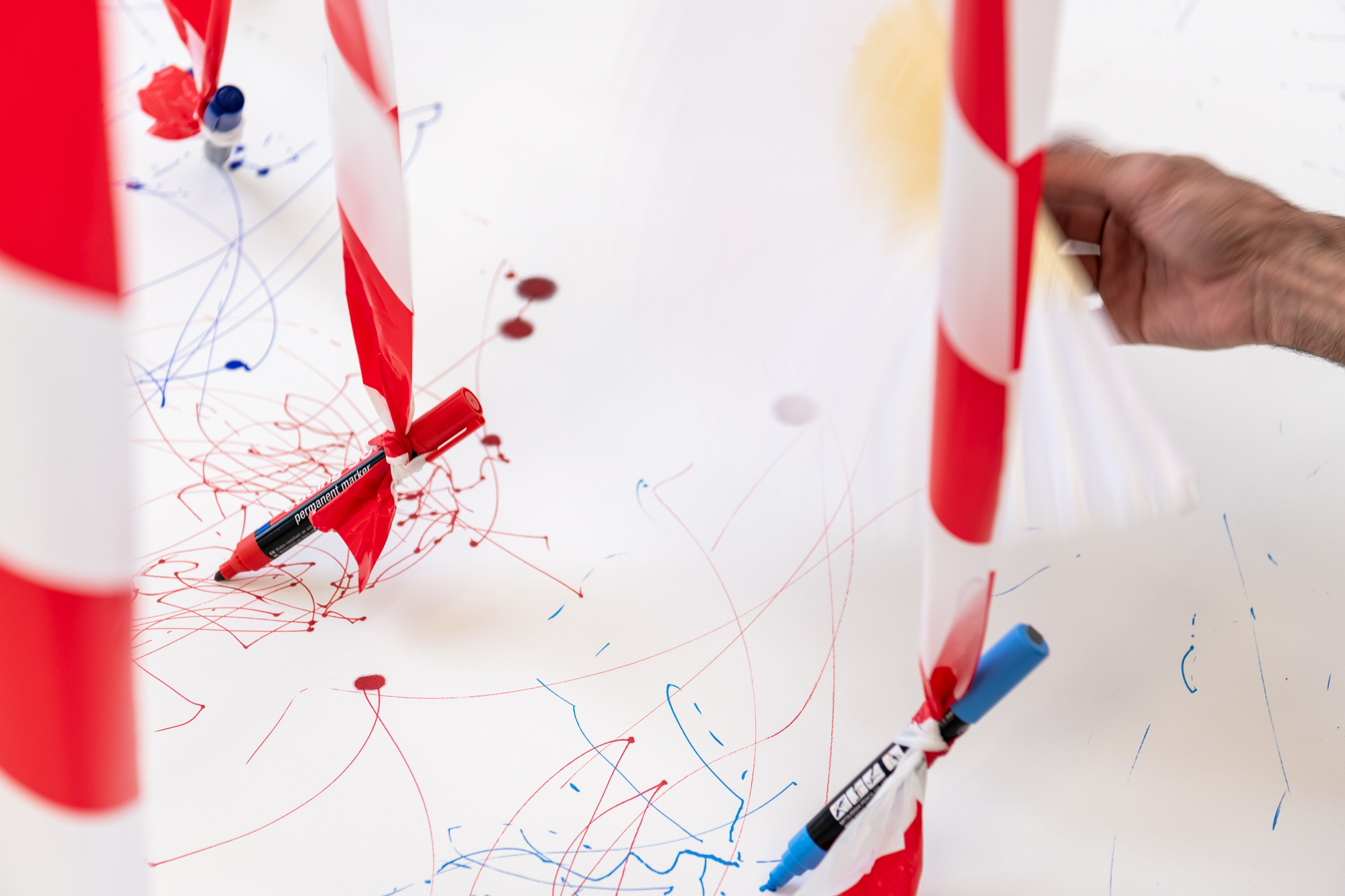
Chance, generating continues the trajectory initiated with the performance Wind Walk, where walking guided by the wind became a poetic gesture to break with the functional logics of urban space. In this new stage, the work moves into the exhibition space as a participatory installation, using chance and human / non-human interaction to question the frameworks of control that structure our societies. Rooted in a critique of Western technological and social systems—built on rationality, efficiency, and binary order—the project explores the cultural difficulty of embracing unpredictability as a vital part of existence.
The installation consists of wooden structures framing a large sheet of paper on the floor and wall, where hanging markers are set in motion by air currents generated by visitors using tools provided in the space. The resulting drawing is shaped by countless variables, the strength and direction of the wind, the presence and proximity of participants, even the tilt of the markers, turning the work into a collective act of creation. Over time, the paper becomes a physical record of shared experience, where author, audience, and environment merge, and the wind itself becomes a collaborator in resisting the dominance of human logic and control.
Squatkit 3000 Premium
Trolley, beer crate, toolboxes, monitor, headphones, stereo video, color, 00:01 min
Variable measures
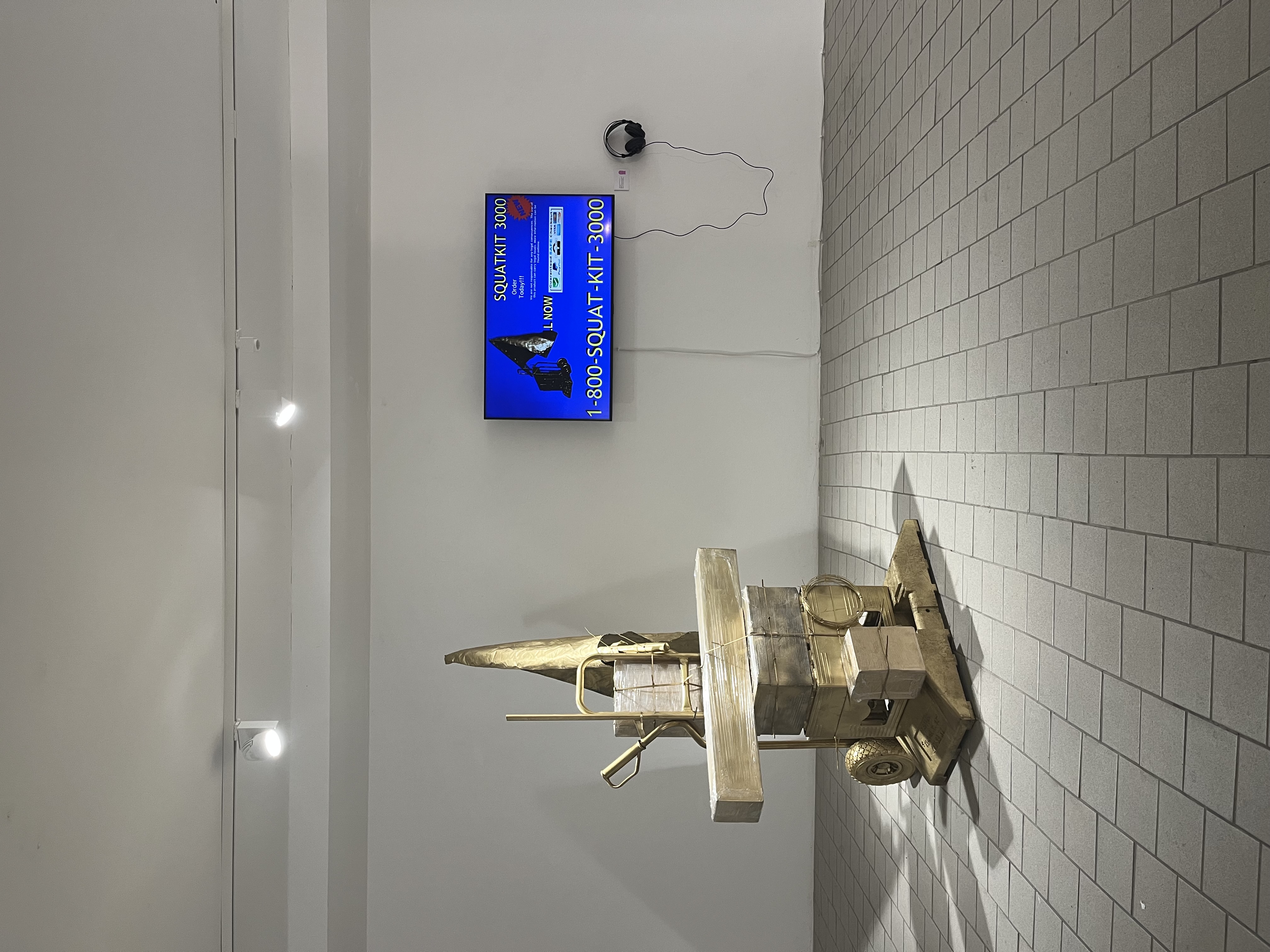
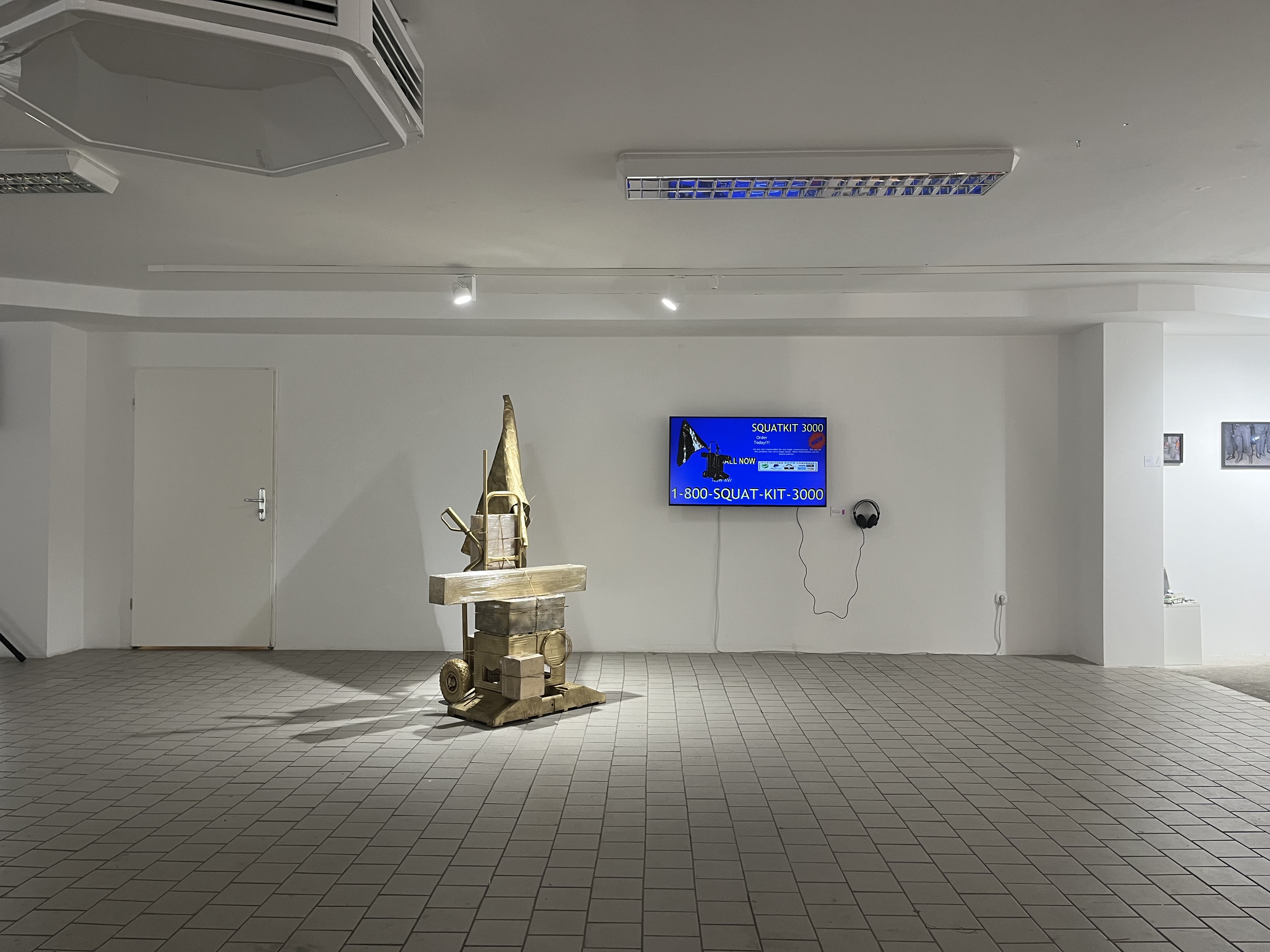
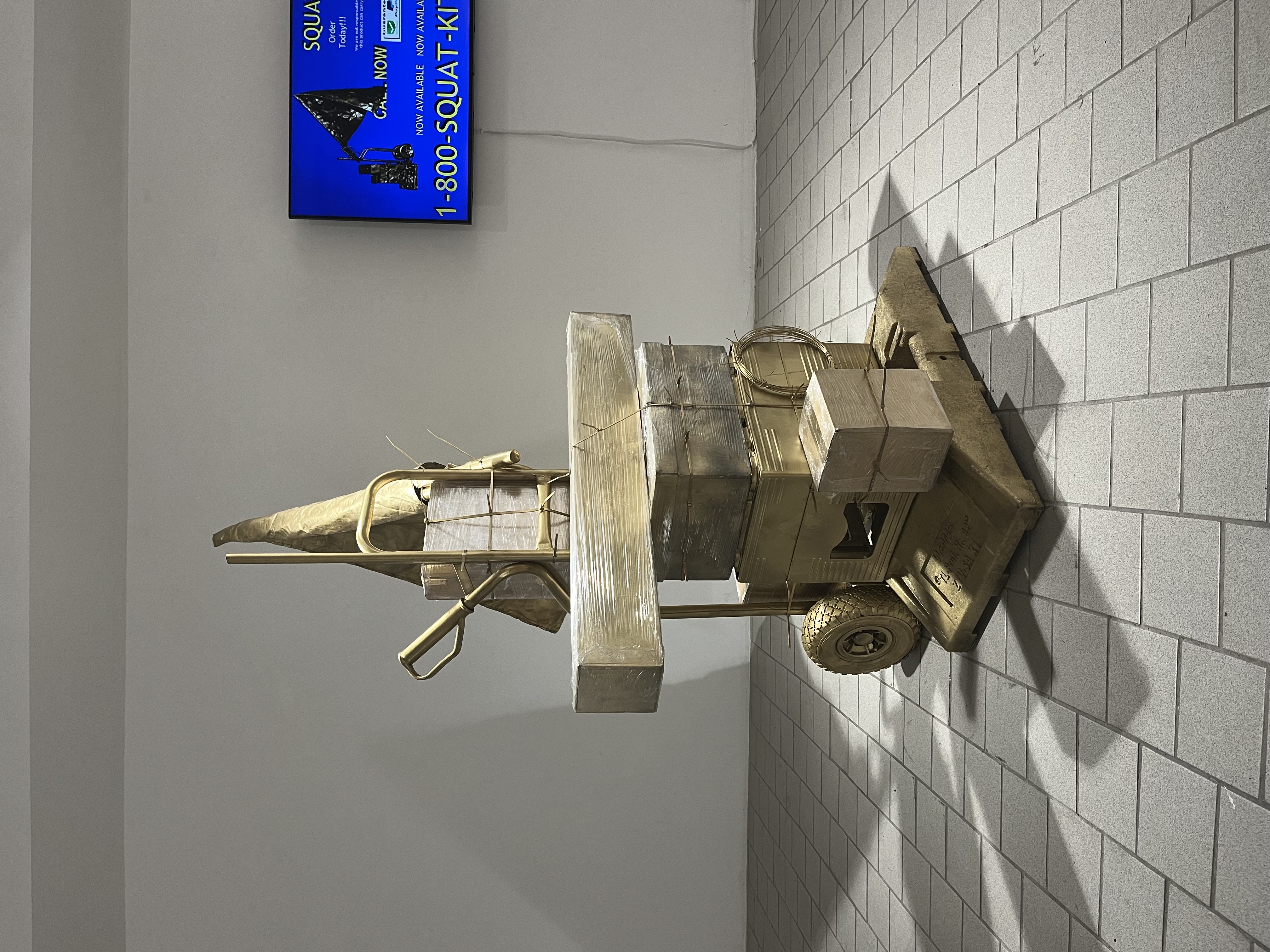
SquatKit 3000 Premium activates the mechanisms of capitalism triggered when a space is squatted. What begins as a gesture of resistance quickly becomes a desirable commodity in the cultural market. By adopting the aesthetics of squatting—long associated with anti-authoritarian movements—the installation raises an unsettling question: is it still possible to escape the cycles of absorption and revalorization that sustain late capitalism? Rather than simply pointing out the irony of a system that turns its opposition into trend, the work invites us to reconsider the relationship between space, power, and legitimacy. Who has the right to occupy, define, and reshape the urban landscape? If squatting, once a radical act, now feeds the very dynamics of speculation and exclusion it opposed, where can true disruption be found? Has resistance itself become just another currency in the economy of cultural production?