Wind Catcher 1, 2 and 3
Wires, textile, screws, packing rings, tape, wood, metal, rope, markers, paper and concrete
Variable measures
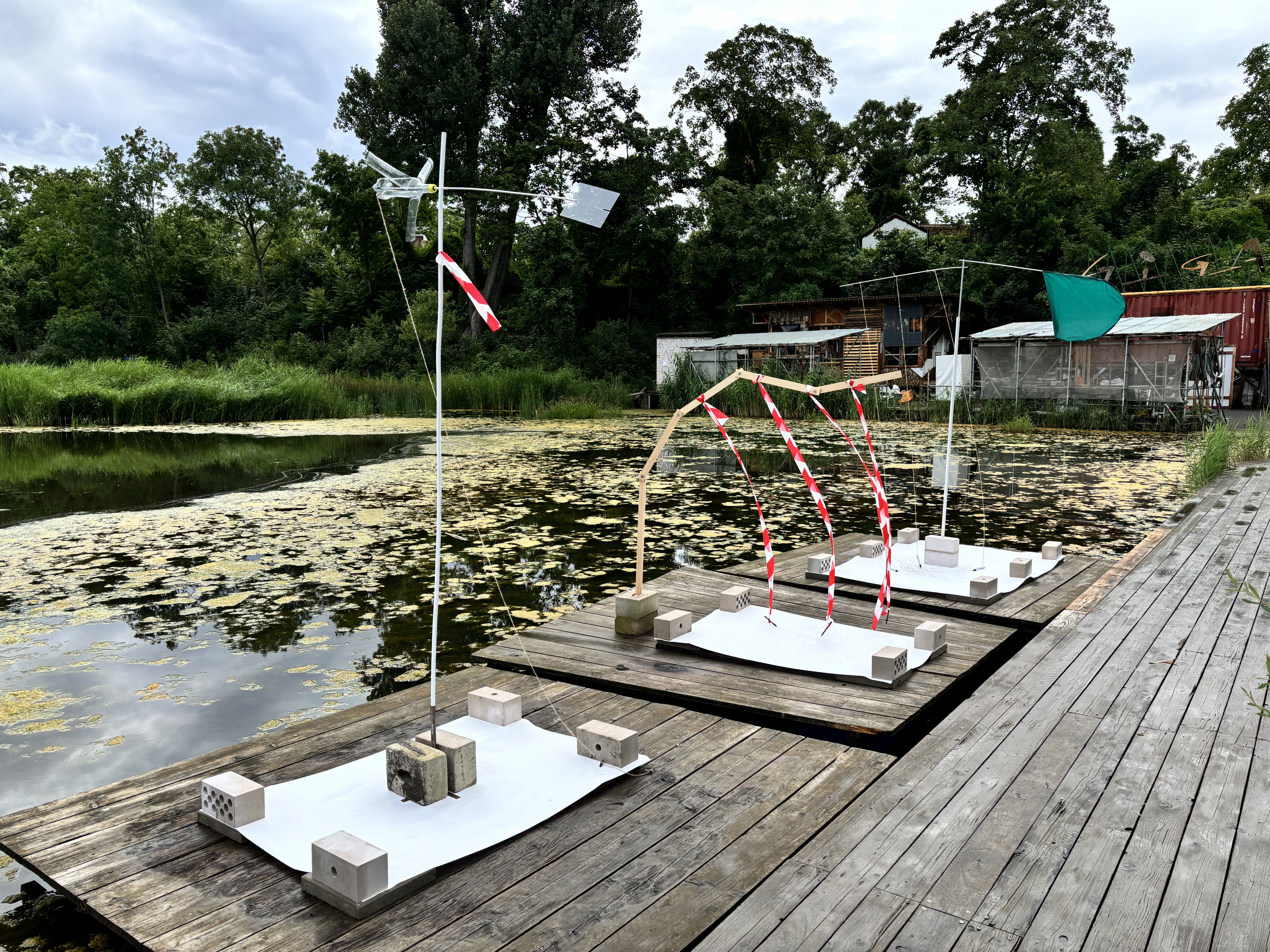
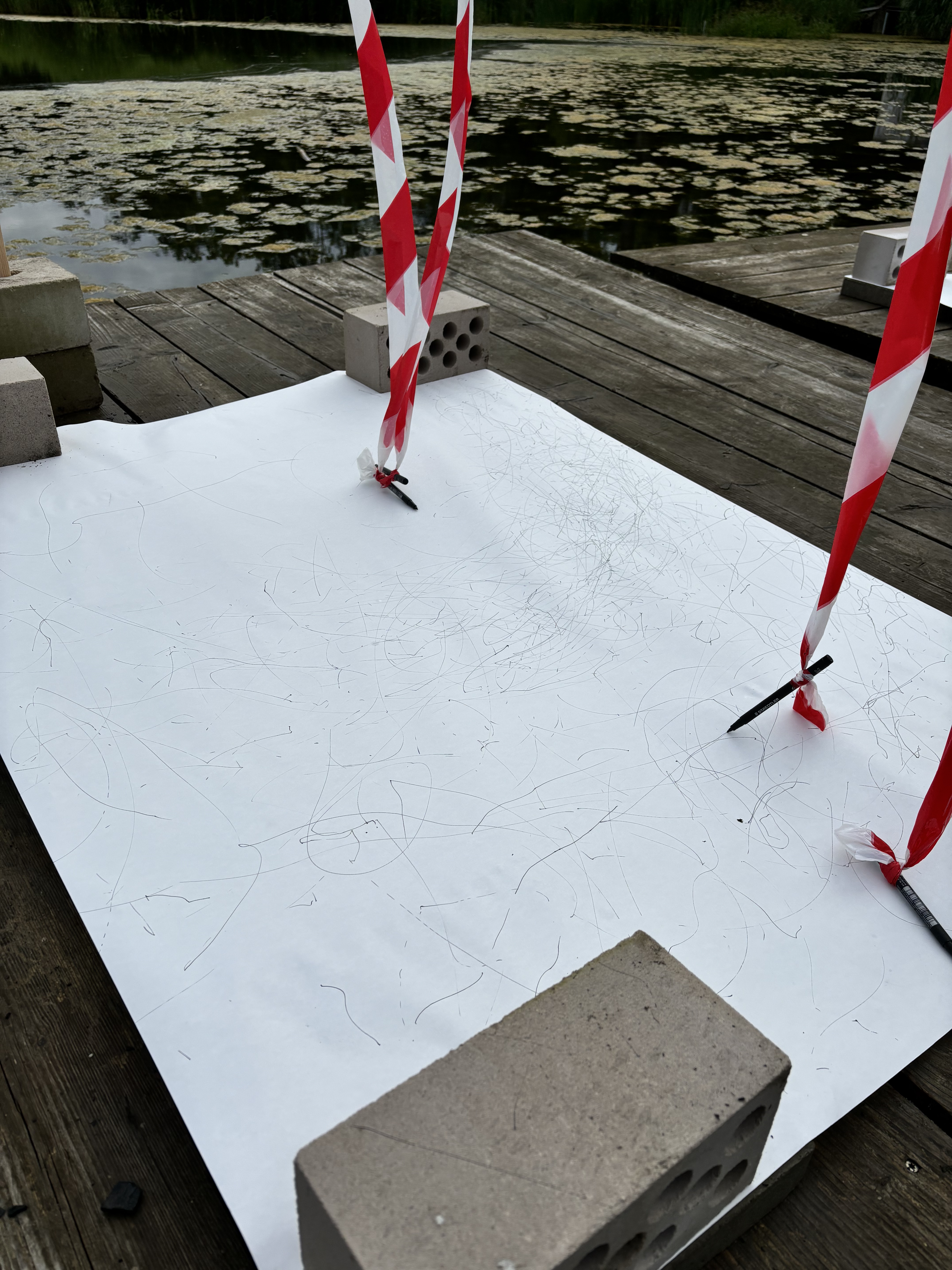
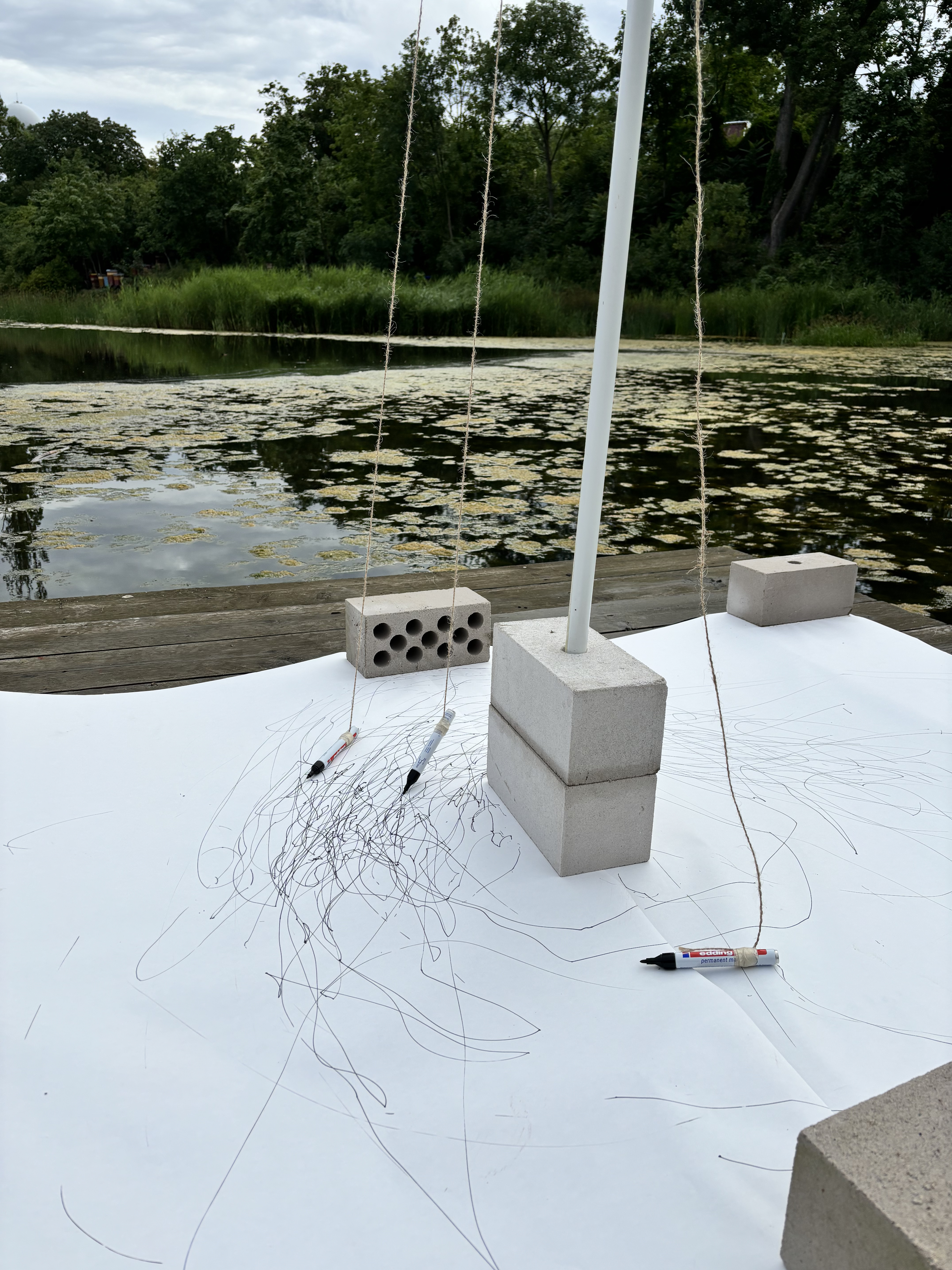
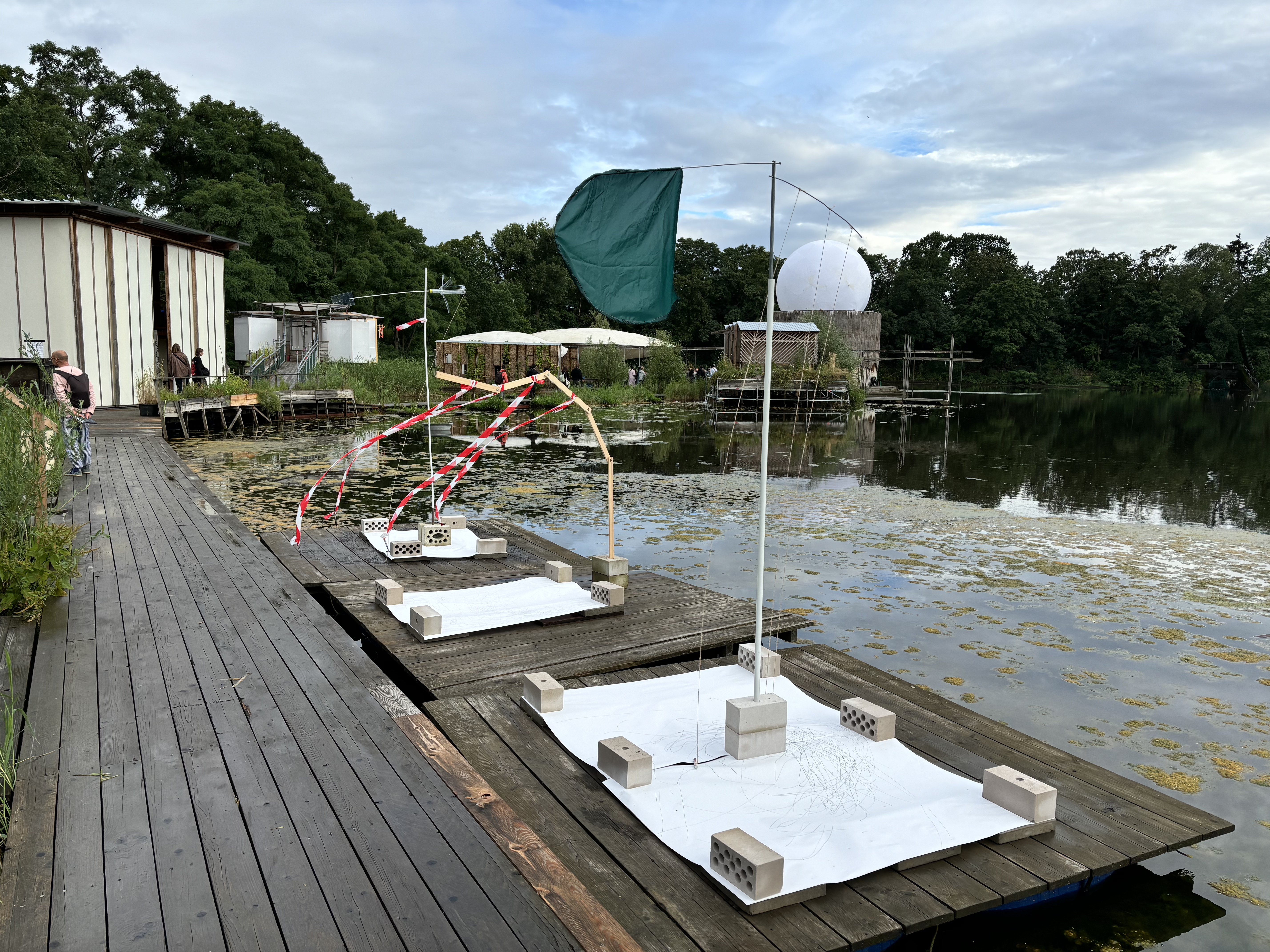
The series of wind catchers emerged from couple months of experimentation and seminars at Floating University. The three sculptures enter into a dialogue with a constant, unpredictable force of this place: the wind. Throughout the exhibition, they collaborate with the wind’s chance movements, creating a unique drawing that records this encounter.
This process invites us to reconsider how we can embrace chance and unpredictability, forces beyond human logic and control, and allow them to shape new ways of creating and being. It asks how we might inhabit the world not only through control, but by opening ourselves to what surrounds us, making space for the unforeseen to participate.
Wind Walk
Video, Stereo, Color
Variable loop
https://vimeo.com/920482771?share=copy
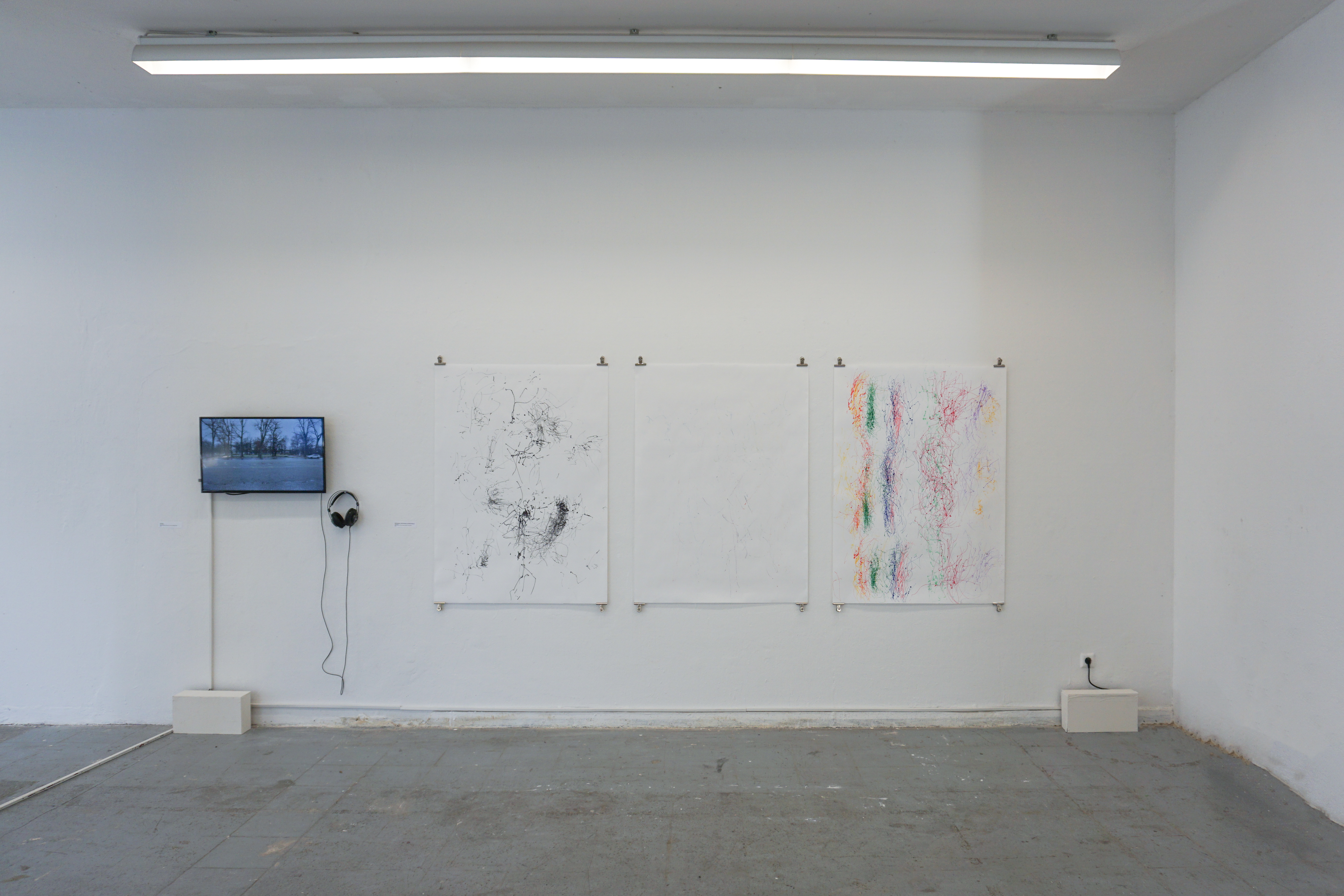 Wind Walk and Wind Drawinds 4, 5 and 6 on view at KunstHalle Berlin Weissensee
Doppelganger
Collaborative project in the seminar Inner Worlds Interspaces Outer
Bodies by Viron Erol Vert
Scaffolding, print on textile, zip ties, eyelets
Variable measures
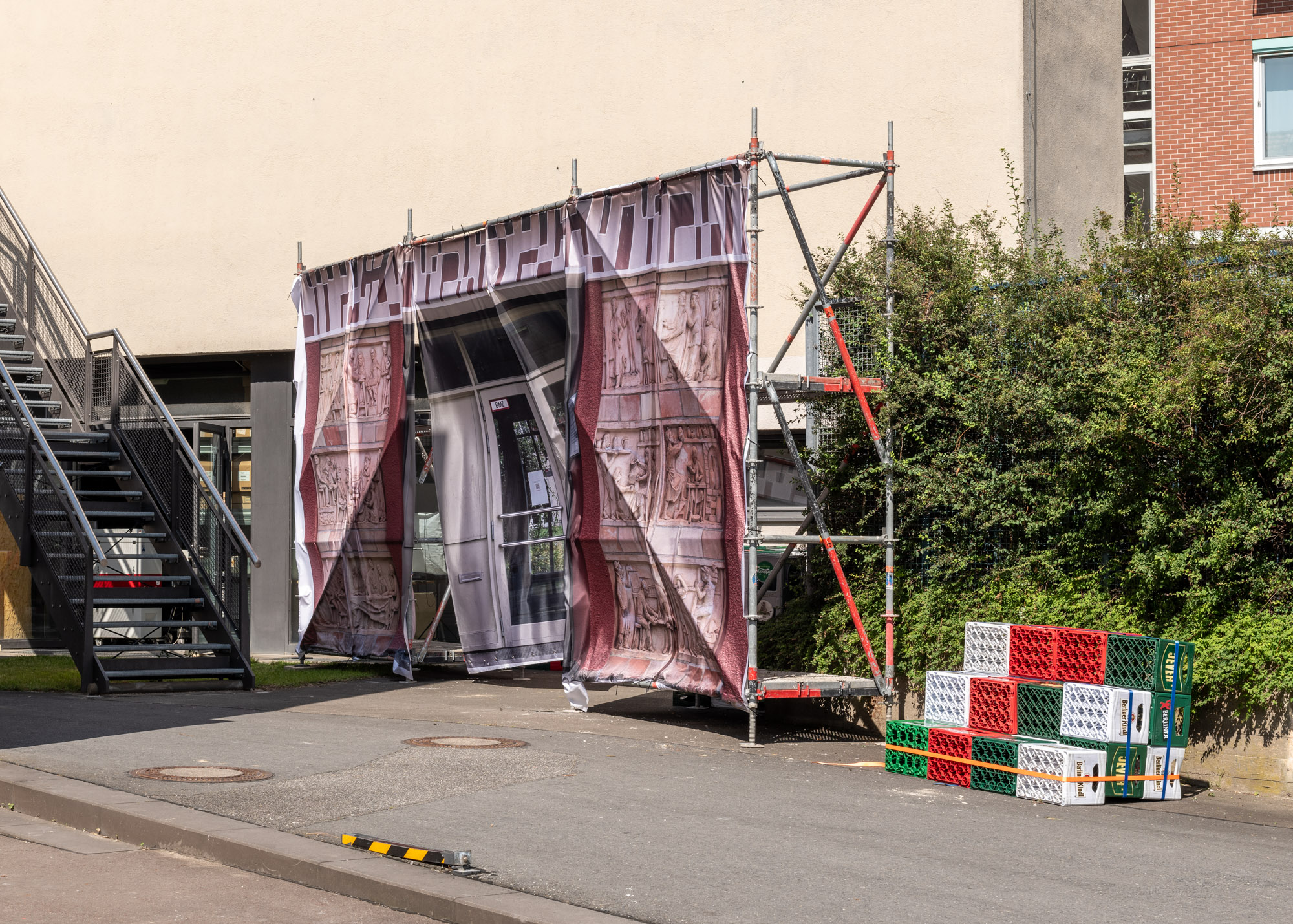
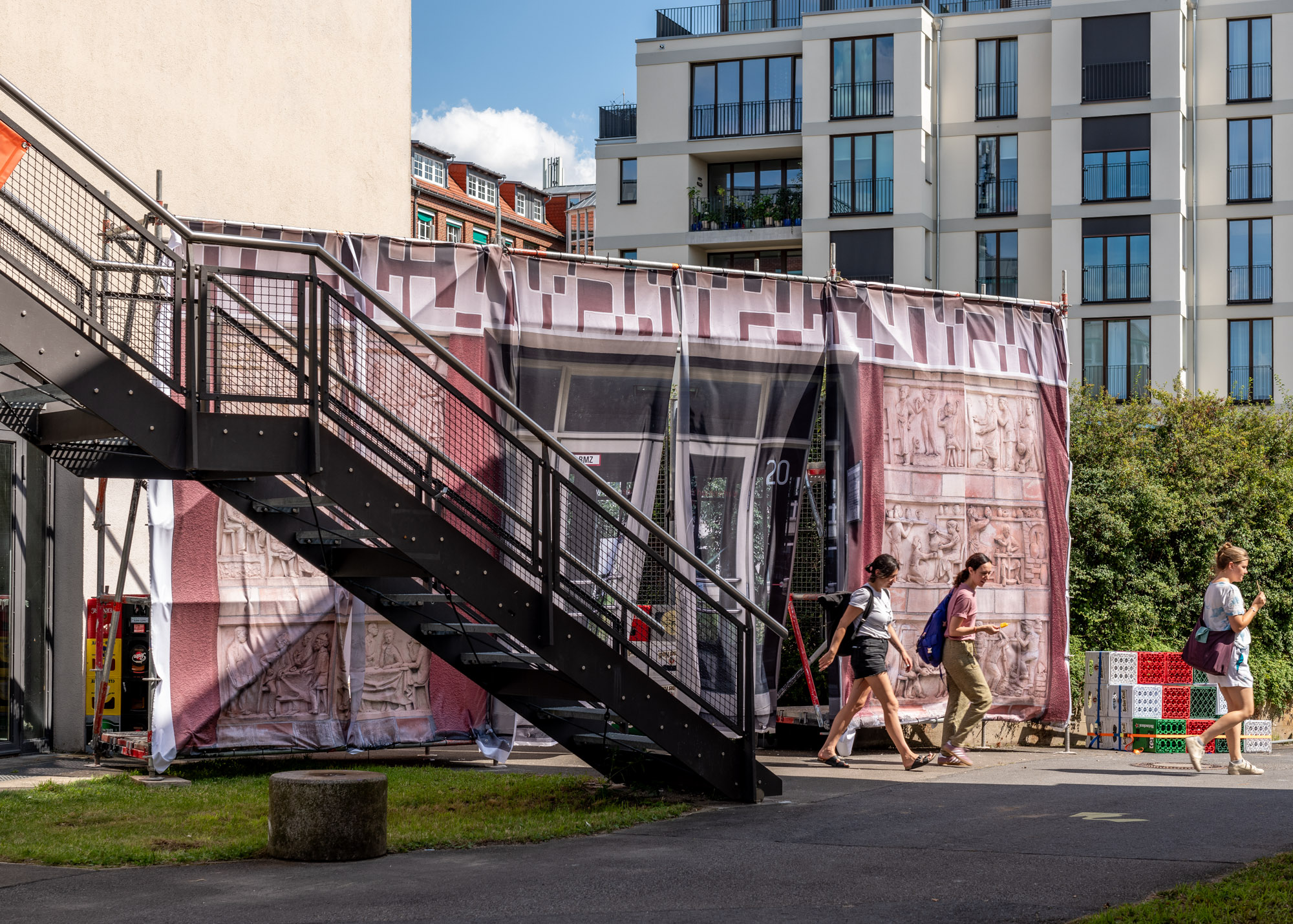
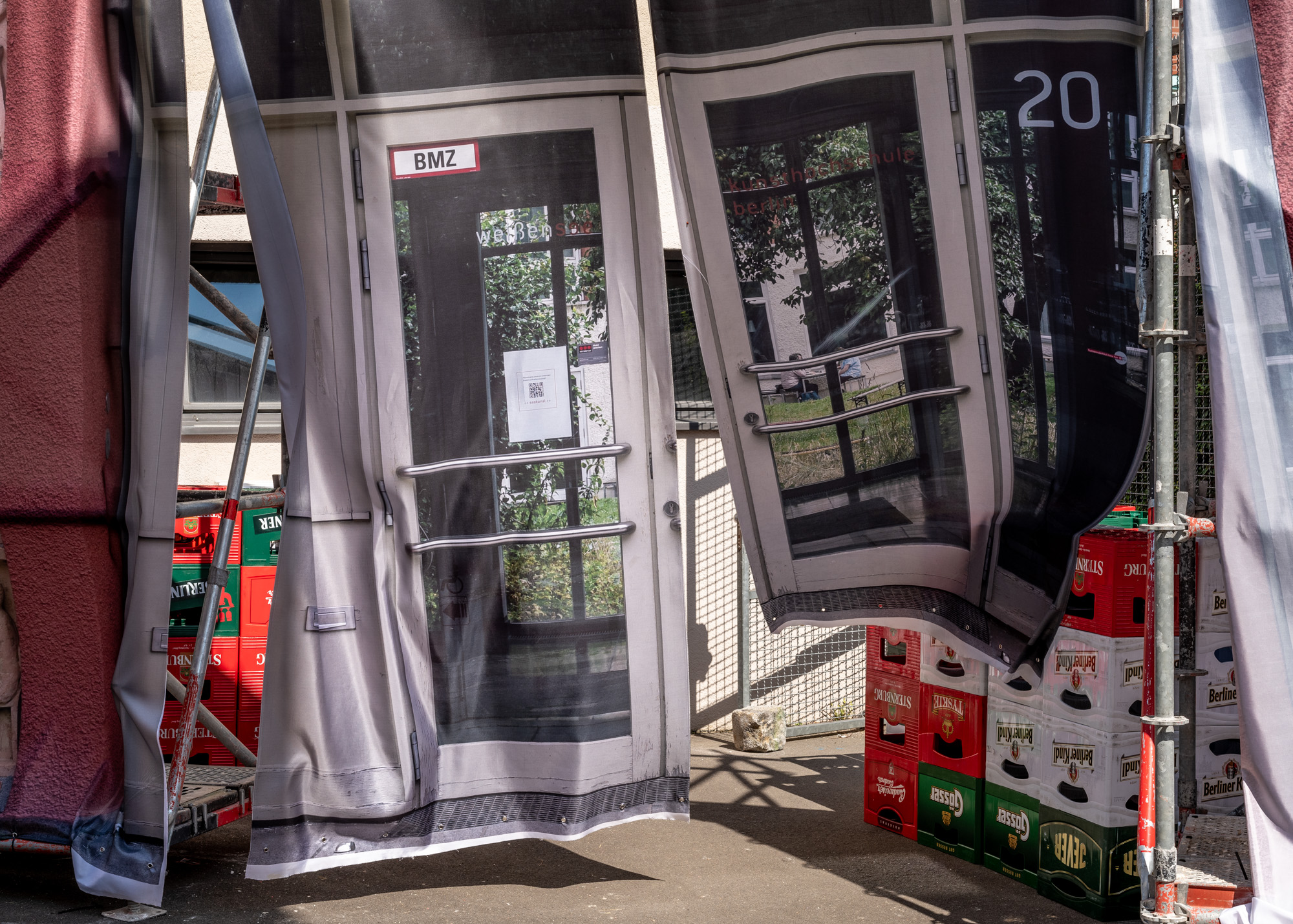
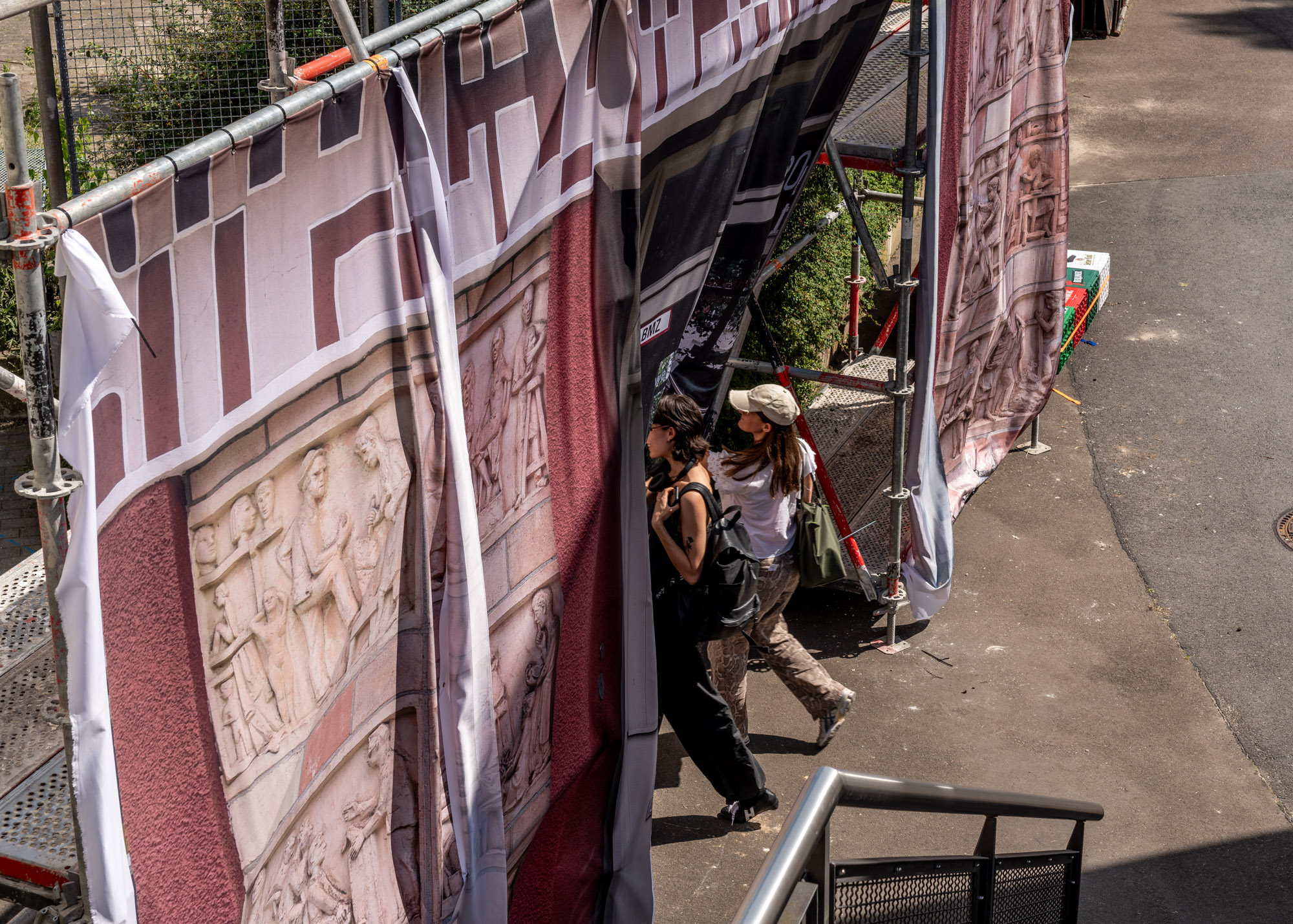 Photographies by Jeremy Knowles
Since ancient times the door has assumed strong symbolism, mostly related to rites of passage, crossing and transition from one place - or state of being - and another.
The architectural installation Doppelganger focuses with irony and playfulness on the relationality between the “main entrance” and the “back door” of KHB Weissensee. With curious spirit, challenging hierarchies of power, we propose to look anew at the marginal and see how “passing through a back door” can act as a catalyst for creating alternate futures, unexpected outcomes or changes of scenery.
In an imaginative play, a visual “changements de caractére”, the main entrance of KHB Weissensee is replicated on fabric - maintaining its original dimensions - and installed by the back door of the university: the concrete and stone architecture is thus rendered ephemeral and fragile.
Furthermore, by using typical construction site elements like scaffolding, fabric, metal rivets and cable ties, we invite to reflect on what it means to construct, reconstruct and deconstruct, especially in a city with such complex and significant building history like Berlin.