58 walks in Pontevedra
Spray on MDF
120 x 120 cm
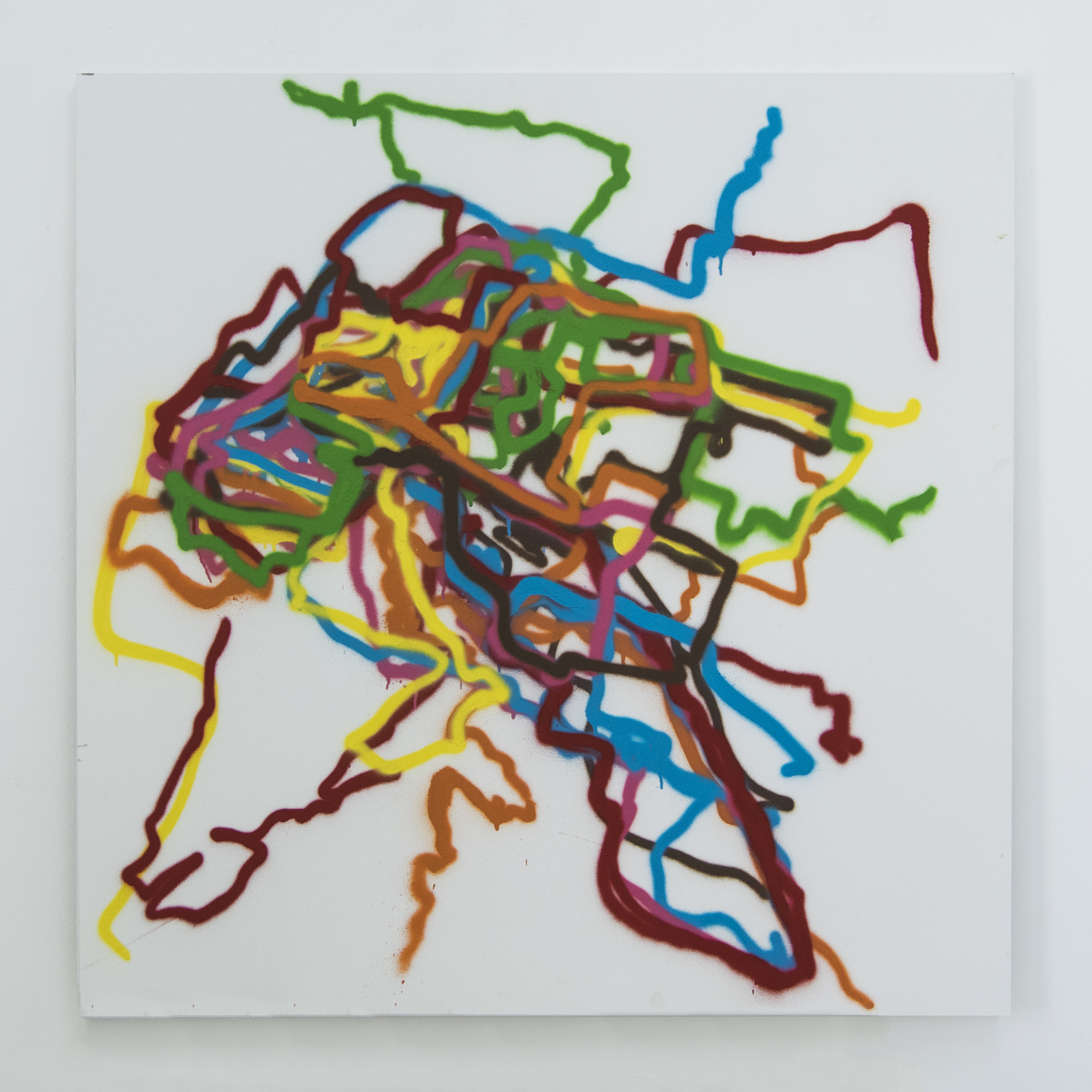
The idea of this painting starts after I did numerous wanders or random walks around the city of Pontevedra, Spain. This way of discovering the city is something that the Situationist used very often in their art works and performances, and for me, was a way to get inspired and to understand the city from a different perspective. During several months I did numerous walkings, always without any fixed course or direction. After some point I start filming the routes that I was doing with my phone, and this piece is the graphical representation of them. Each line of the painting represent a walk, which first is drawn by myself with the physical action of walking in a space and after is represented and painted on the MDF. For this representation I used a sequence of seven colors, each one of them representing a day of the week. The painting contains a total of 58 walks, each one with a different duration, process and context.
Camouflage
Mixed media
Variable measures
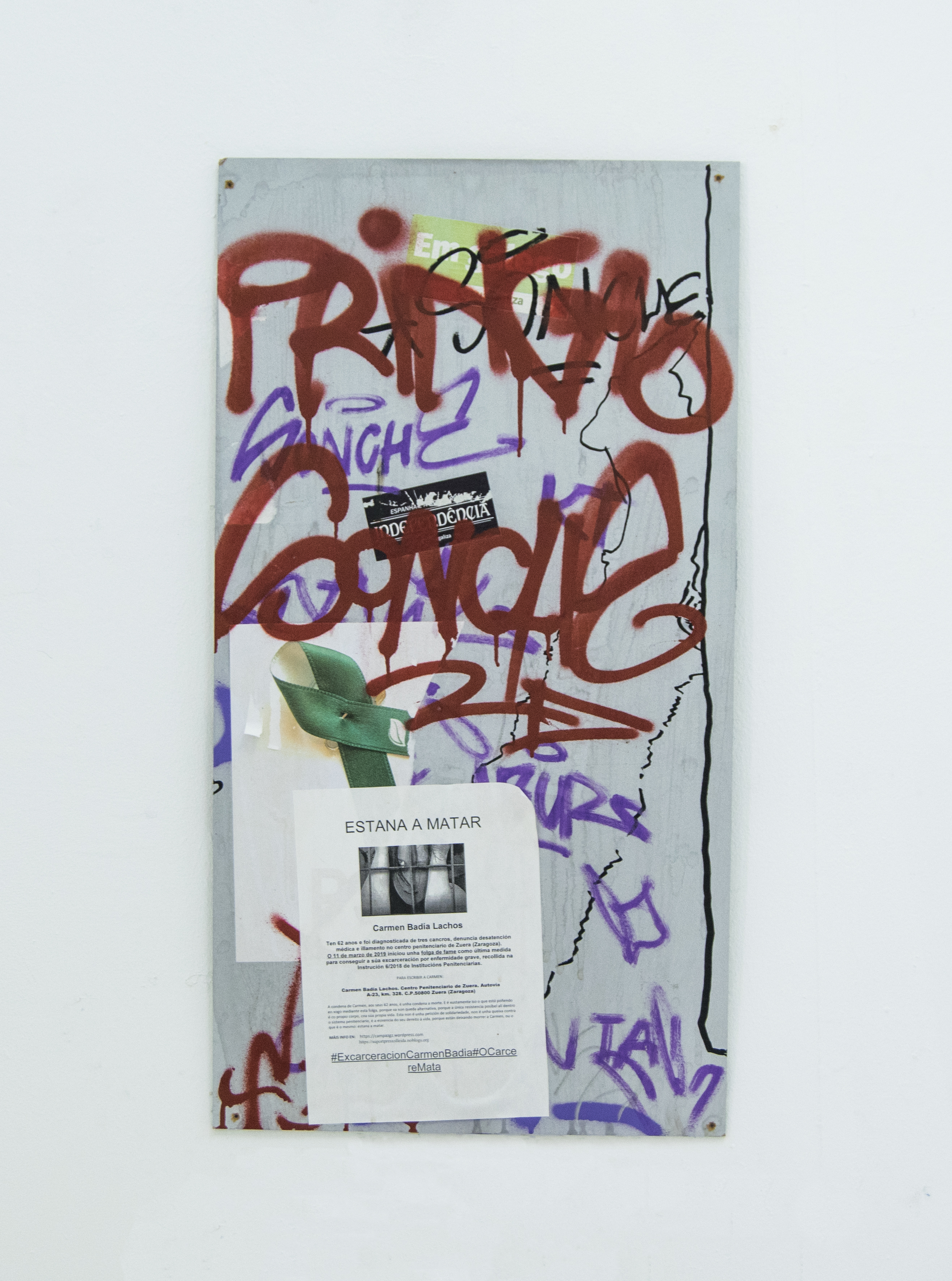
Table 1 (Camouflage series), mixed media, 85 x 45 cm
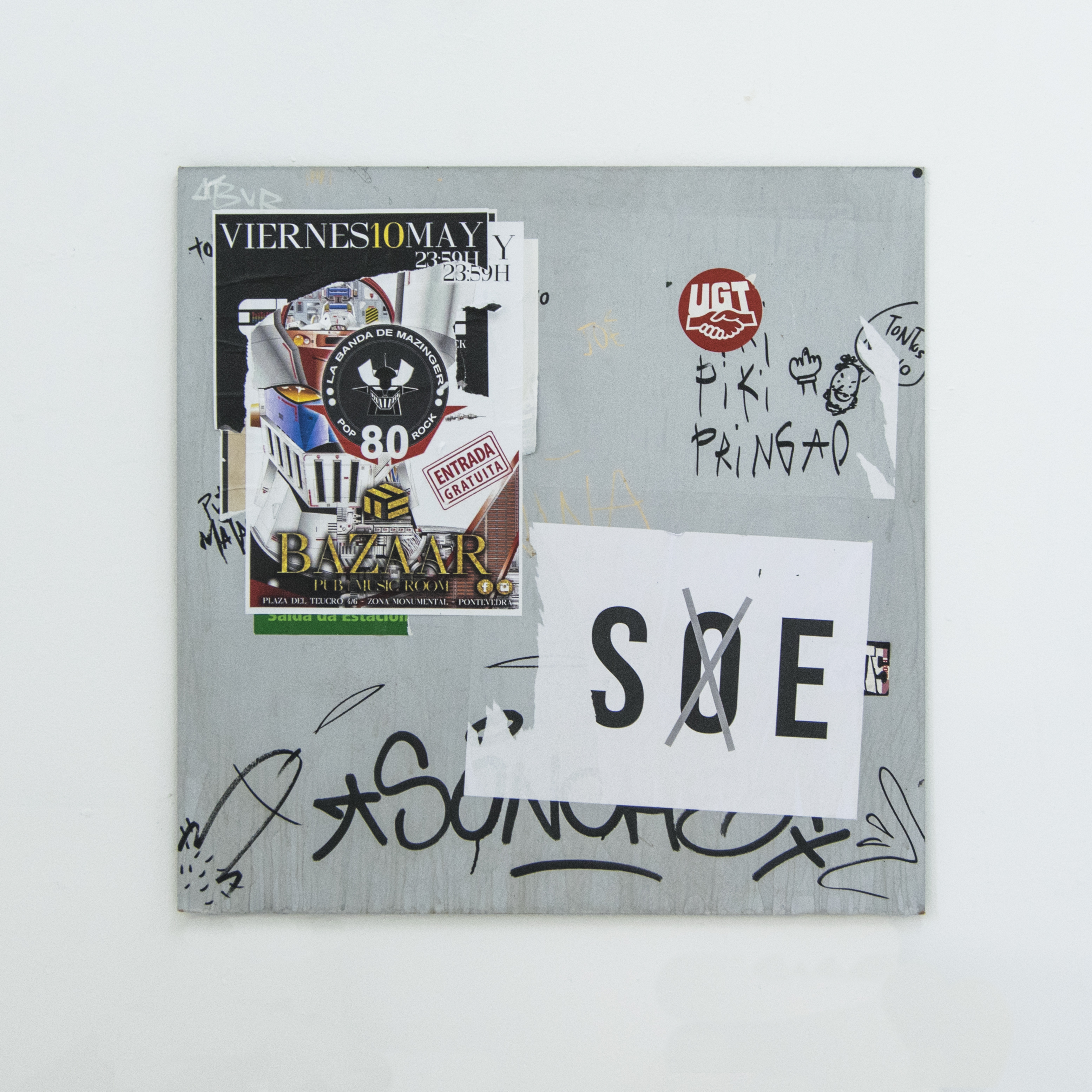
Table 2 (camuflage series) mixed media, 89 x 89 cm
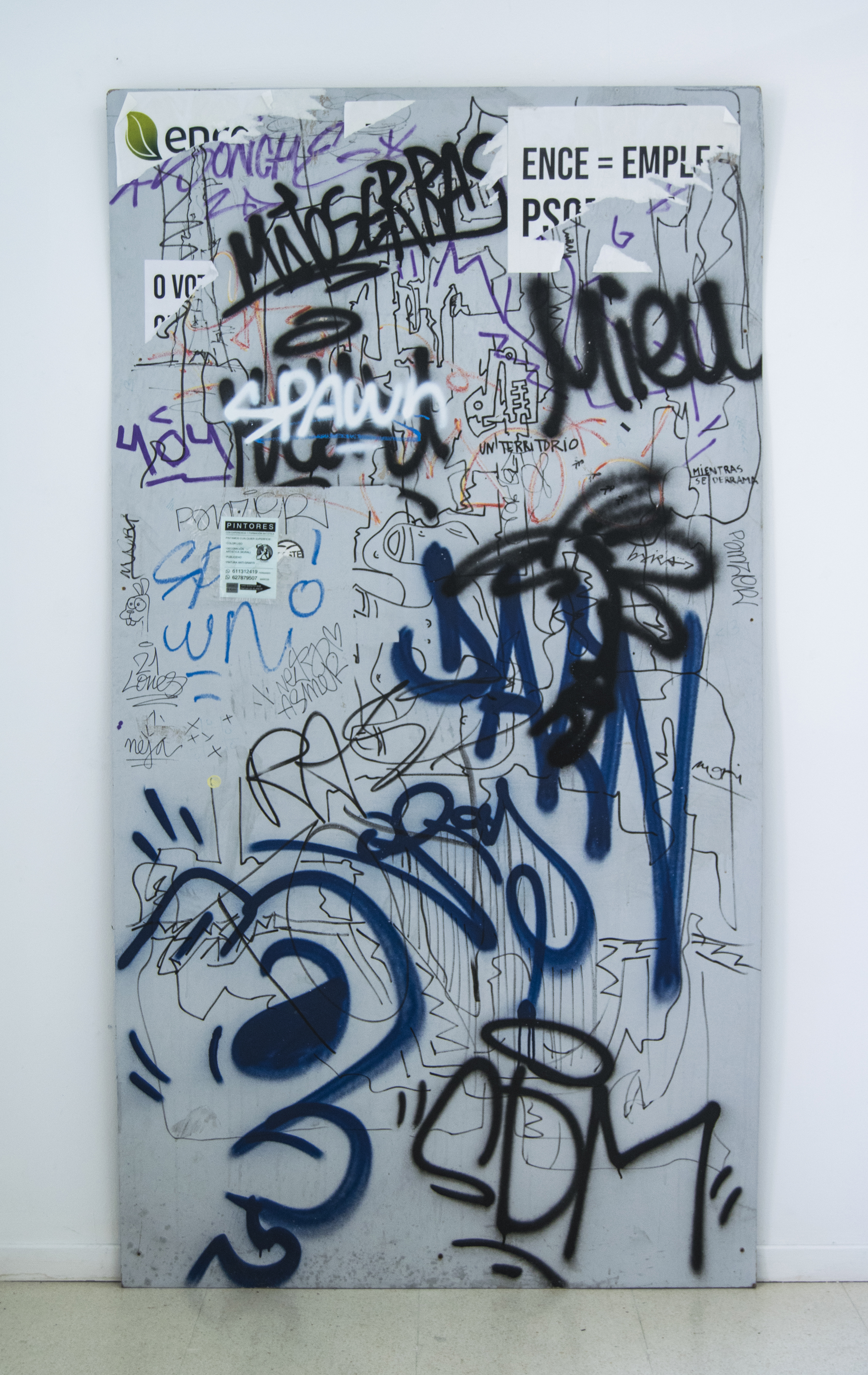
Table 3 (camouflage series) mixed media, 223 x 120 cm
During the tours mentioned above I realised that some spaces in the city create a kind of playground where people unconsciously participate, in this context I started the series Camouflage. This work has a total of four DM boards that were custom made and placed in empty spaces in the city and left there for 3 to 5 months. At first the boards were completely white and clean but over time people started to intervene on them, so unconsciously the inhabitants became an important part of the working process and little by little the DMs became part of the space. In this way the artist’s power to make formal decisions about the work is eliminated and the size of the wood is predefined depending on the place it occupies. The boards capture their environment and the people who inhabit it, the boards are part of the environment but also offer information about what happens in it, transforming the space but also being transformed by it. In the end I recovered three out of the four original tables.
Monochromes
2019 - present
Plastic paint on wall
Variable measures
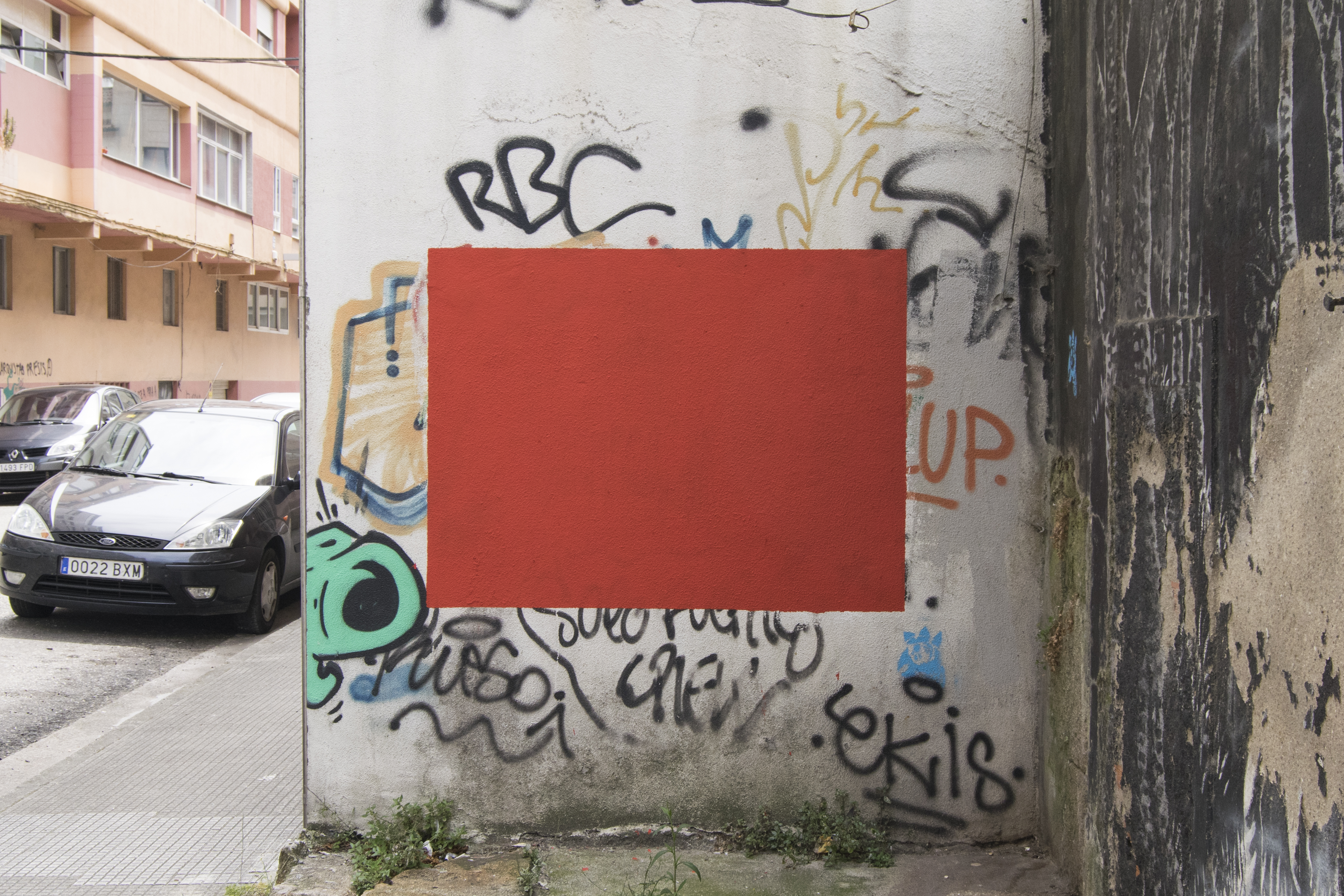
Red, 145 x 109 cm
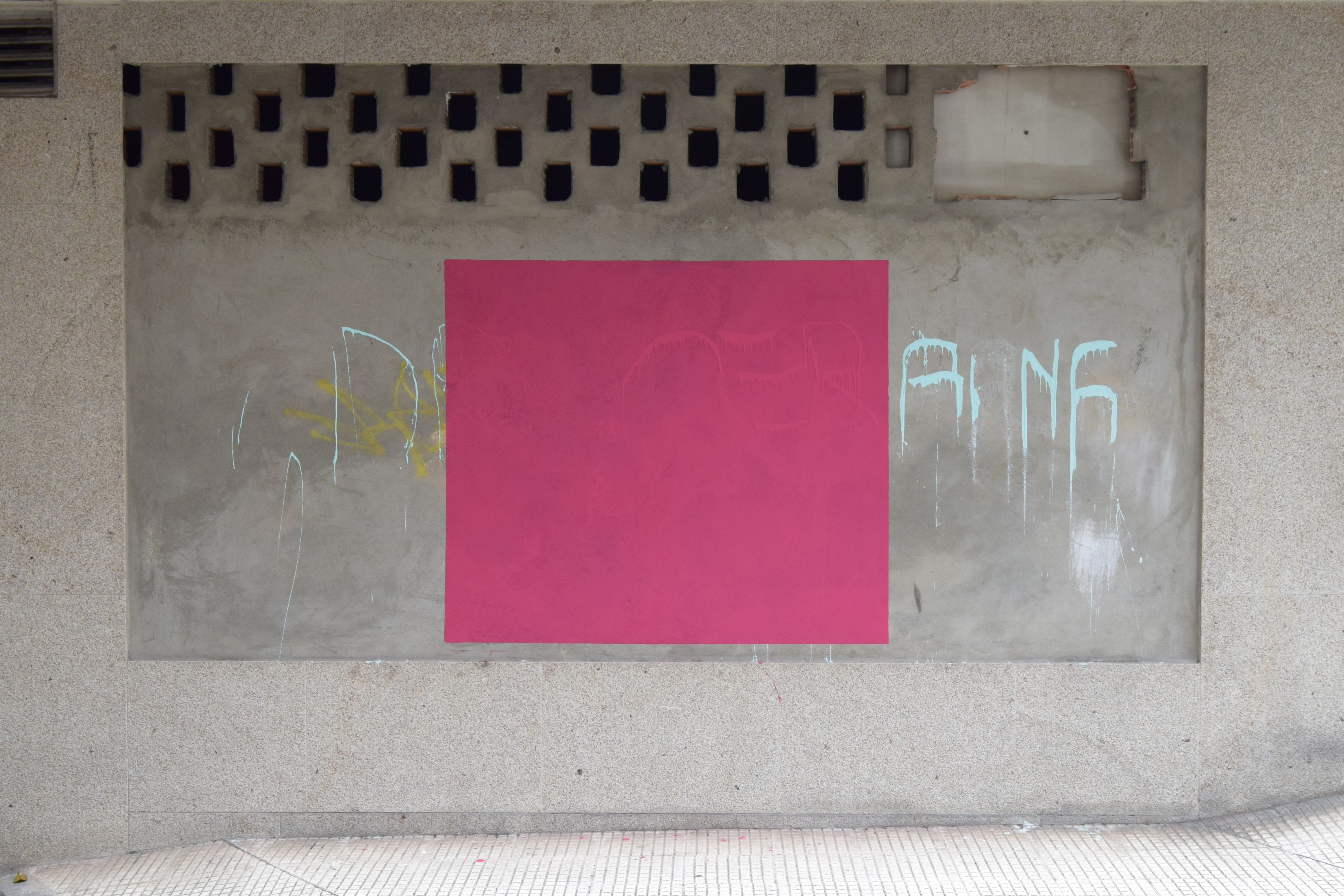
Magenta, 158 x 136 cm
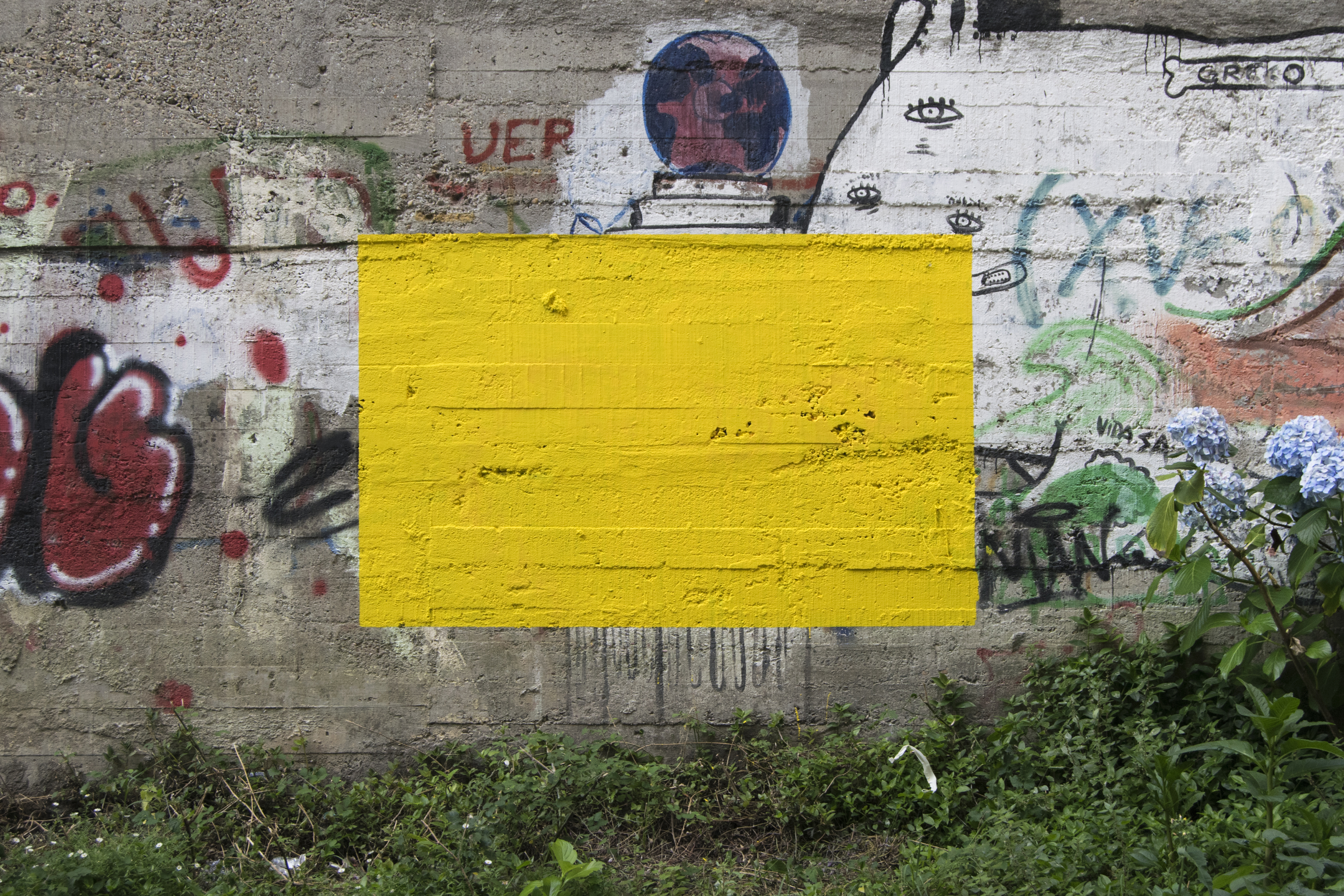
Yellow, 190 x 119 cm
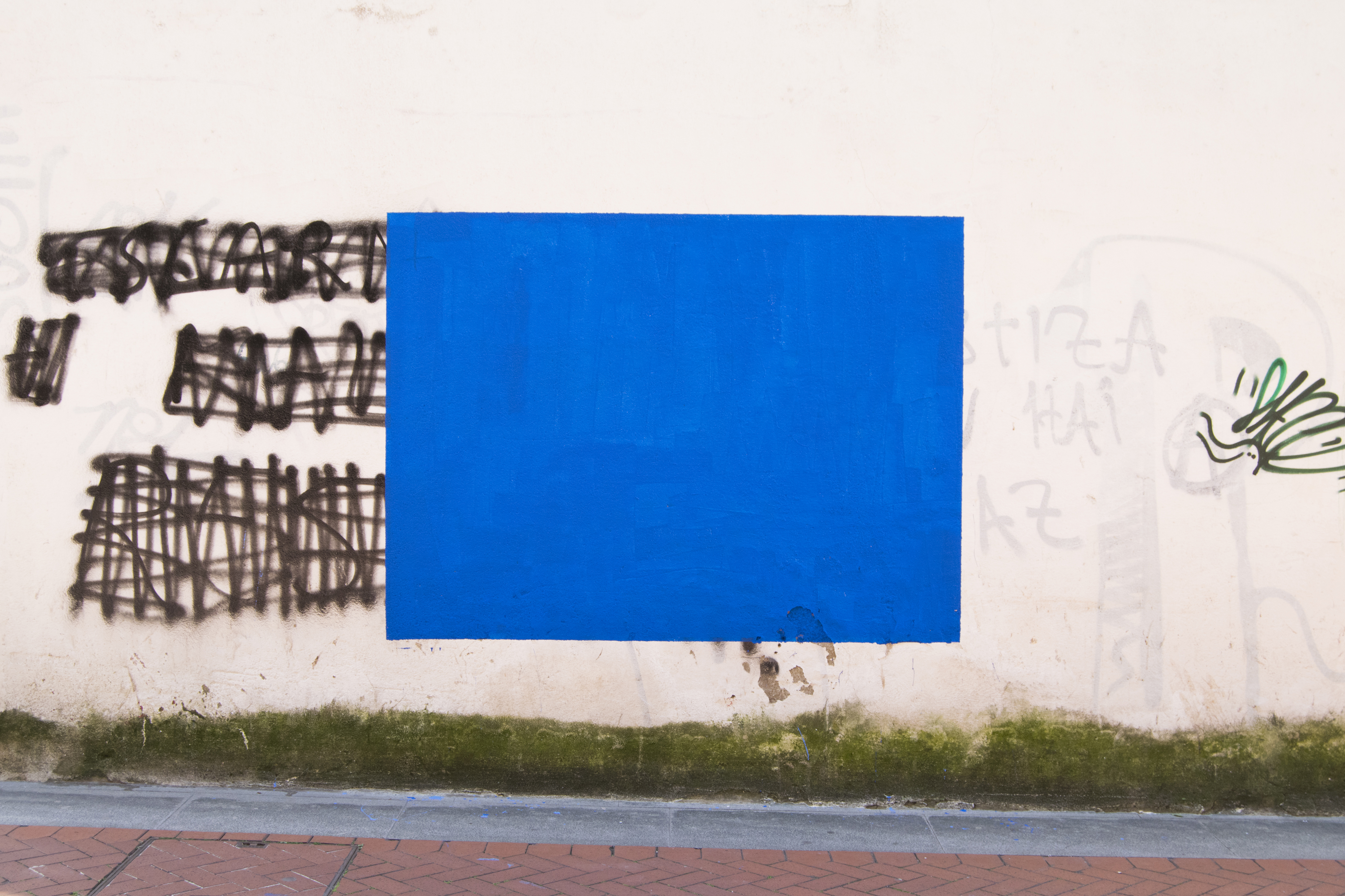
Blue, 201 x 149 cm
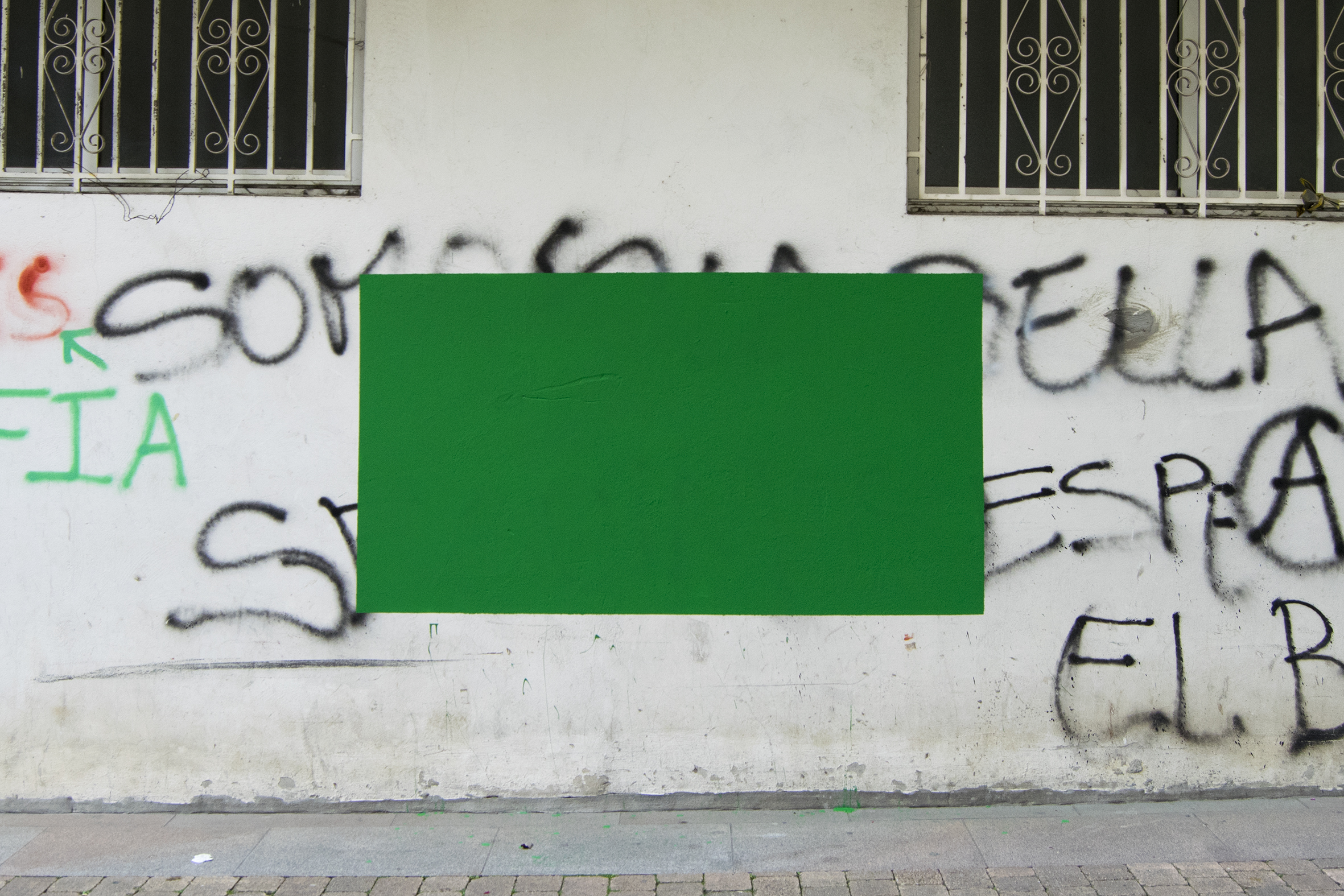
Green, 208 x 113 cm
The monochrome has been used in the history of art to break with the classical ways of making and understanding painting. Each monochrome consists of the maximum simplification of painting and the total elimination of the pictorial gesture, reducing it to a rectangular shape and a single color. This simple form, together with the use of bright and flat colors, makes the monochromes stand out against the discontinuous and heterogeneous forms typical of urban space. The Monochromes do not represent anything or speak of anything, but represents and speaks for themselves. It enhances the idea of color as a perceptual and visual experience, providing us with a place of calm. The monochrome is understood as a work of X measures and X color that can be taken to different places, maintaining its technical characteristics, but changing its concept and connotations depending on its context. In this case, the work is carried out in the urban space, but it can also be repainted and presented in the exhibition space, confronting both places: the street as a space of artistic freedom, full of information and accessible to all people; and the exhibition space as a white and neutral place, limited to a type of work and a certain audience.
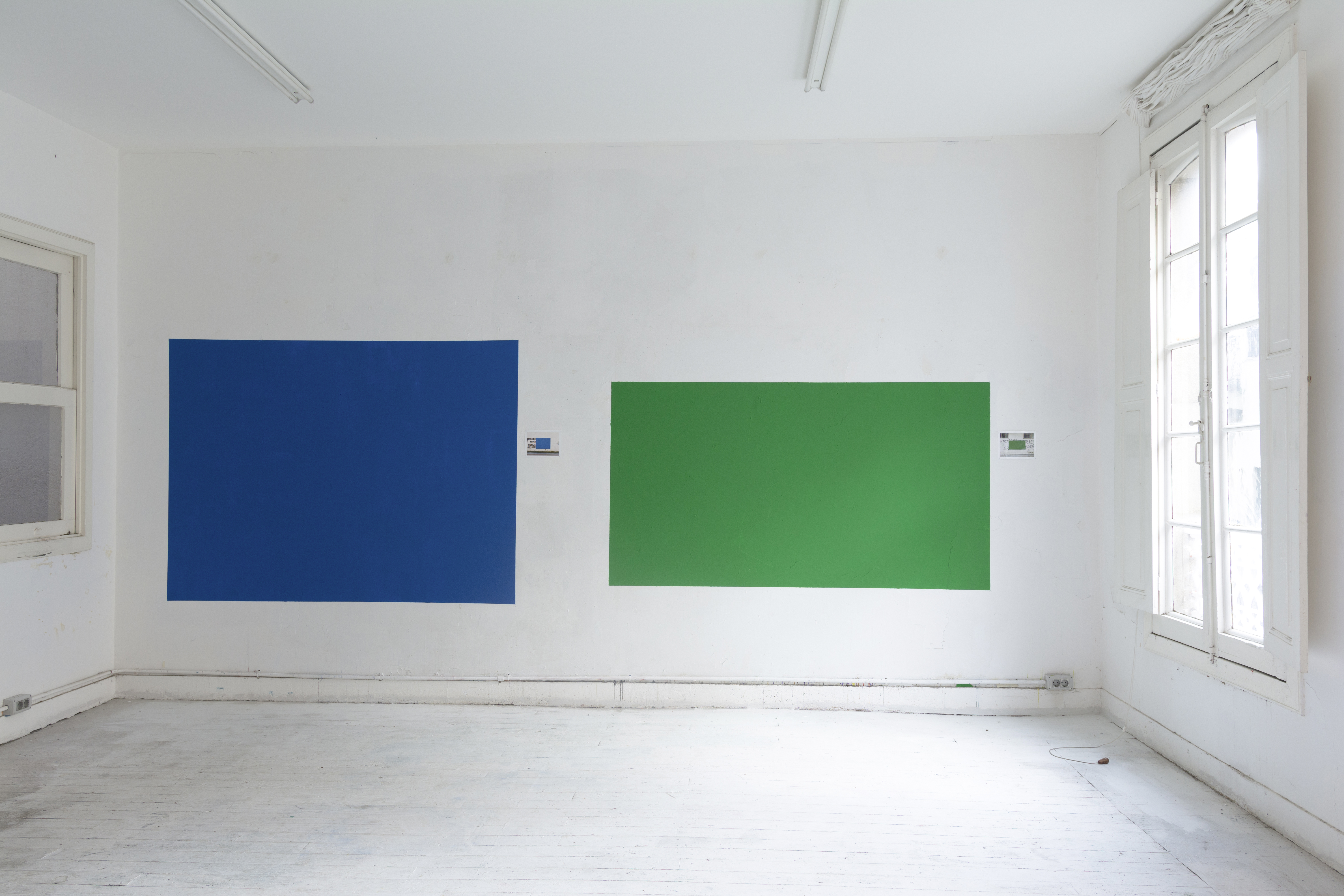 View of Blue and Green monochromes at Postgraffiti exhibition, Vigo 2020
Picture by Juan Rivas
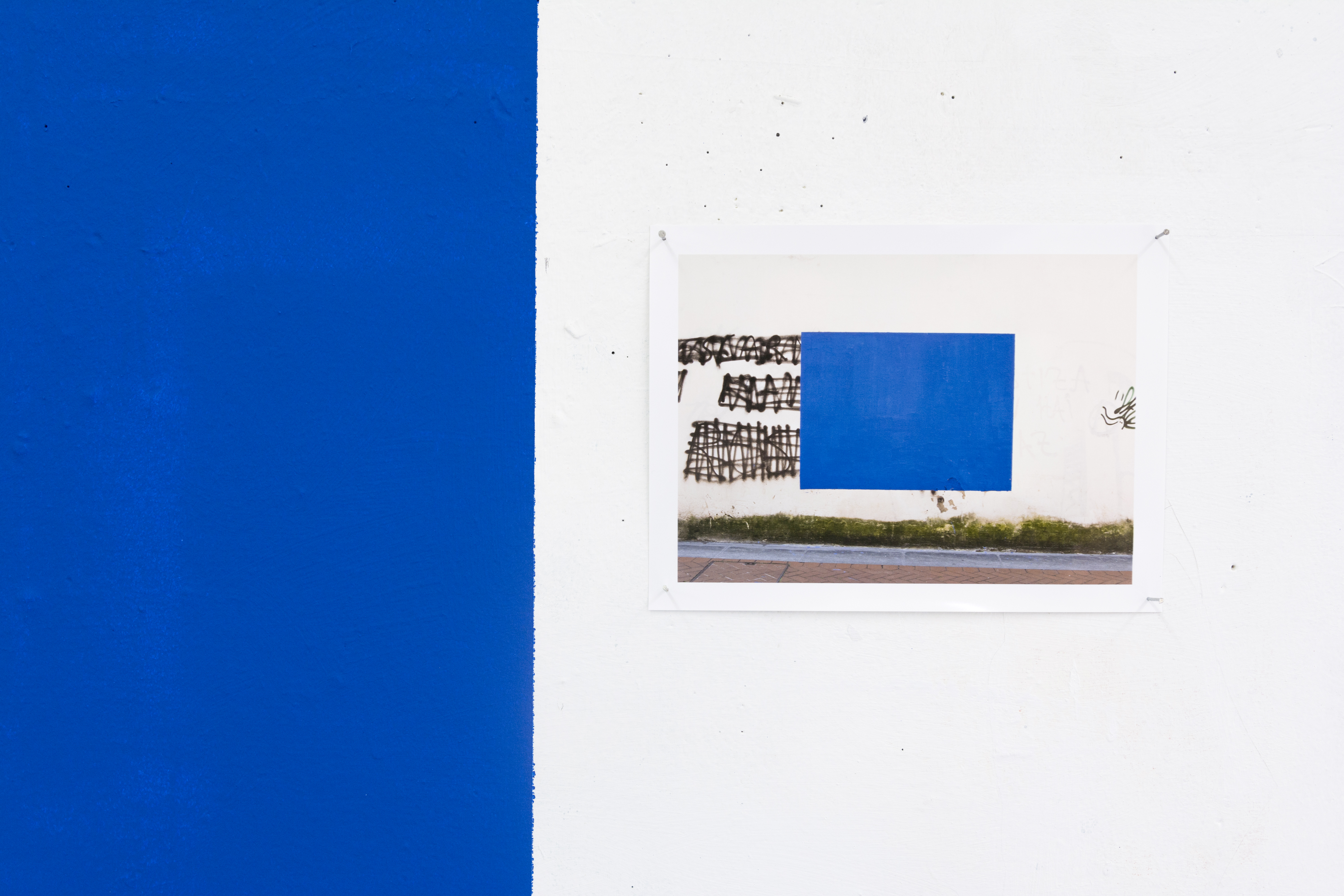
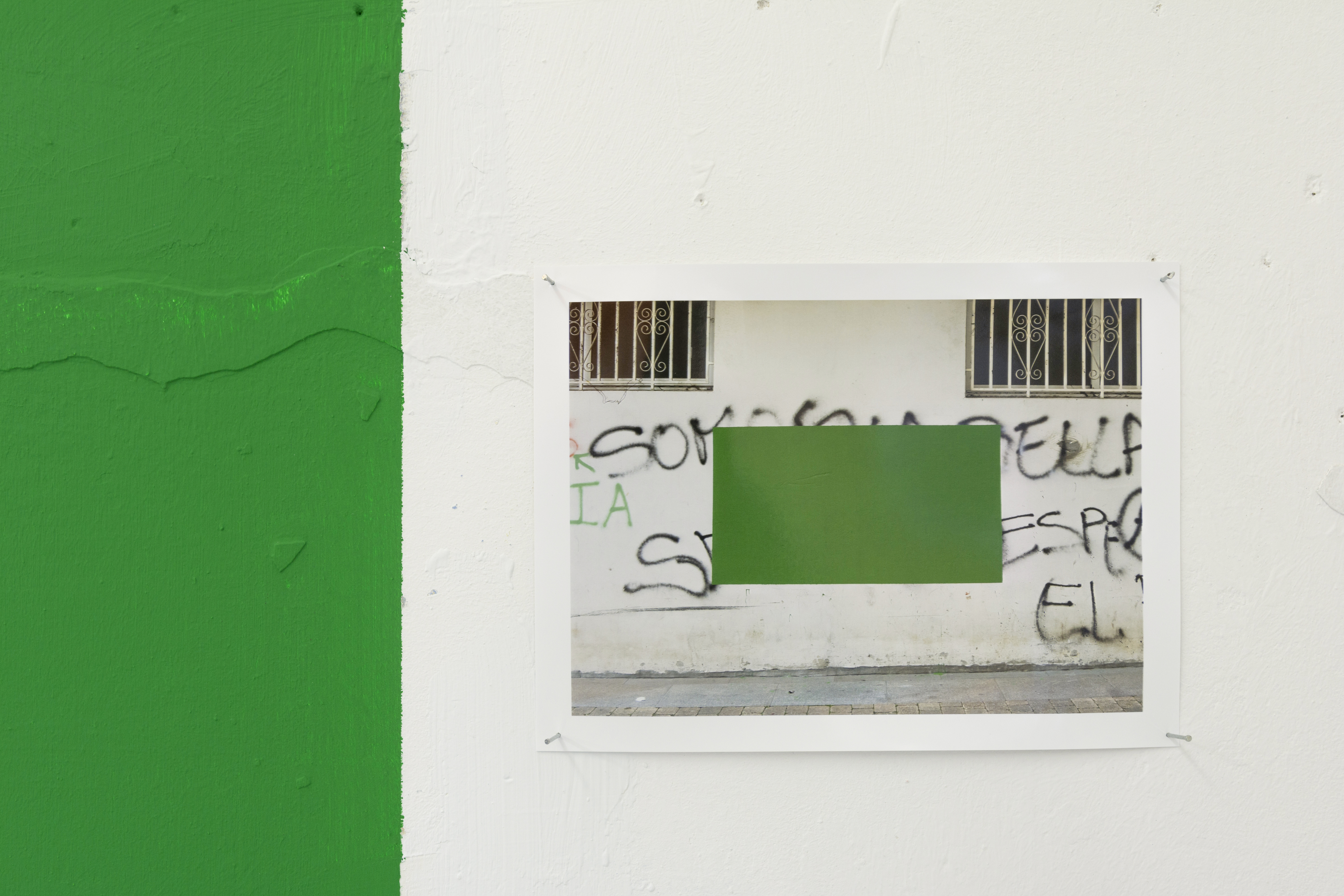 View of Blue and Green monochromes at Postgraffiti exhibition, Vigo 2020 (detailed view), pictures by Juan Rivas